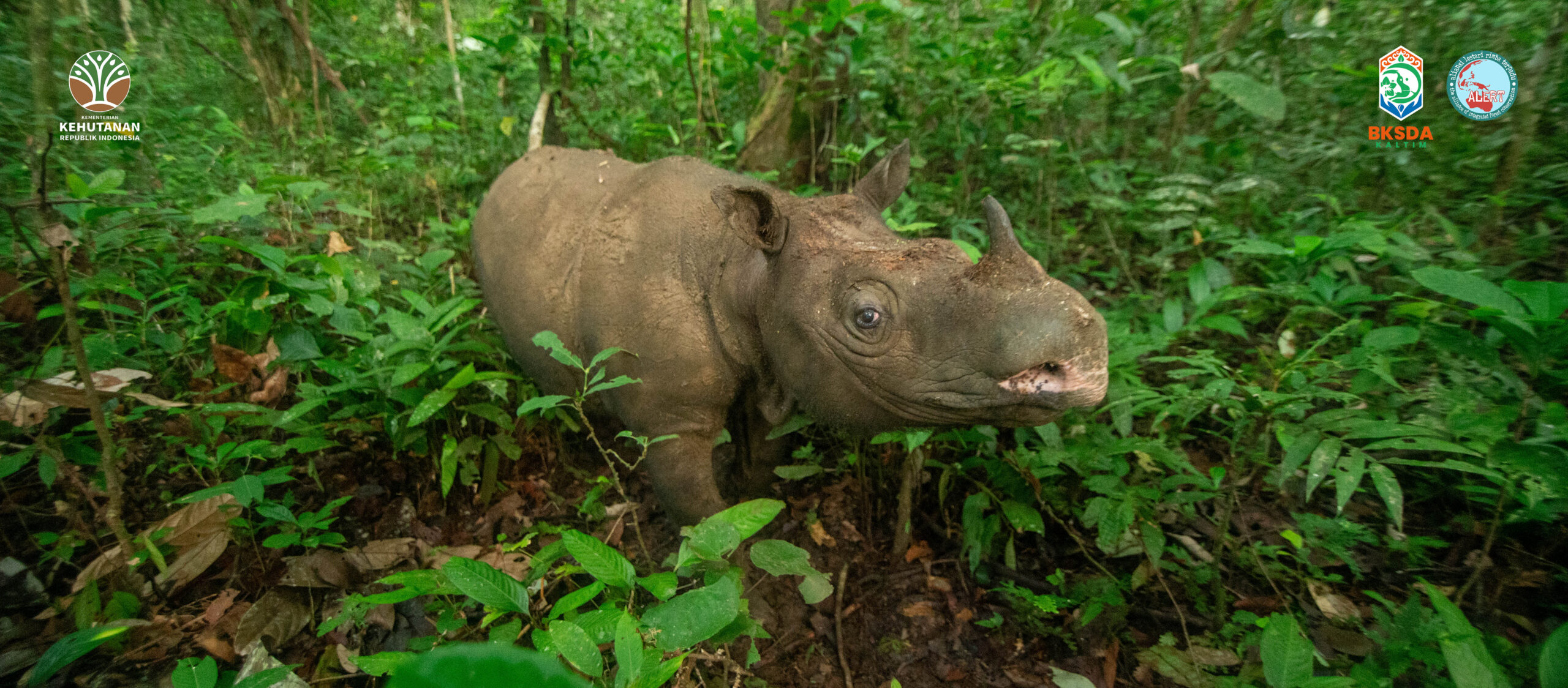
As a follow-up measure, the Government of Indonesia initiated the development of the Kelian Rhino Sanctuary (SBK), located within the Kelian Lestari Protected Forest in West Kutai Regency, East Kalimantan.
The Kelian Rhino Sanctuary is managed by the East Kalimantan Natural Resources Conservation Agency (BKSDA) with support from various conservation organizations, including Aliansi Lestari Rimba Terpadu (ALeRT).
Covering an area of 405.83 hectares, SBK facilities include bomas, paddocks, a veterinary care unit, laboratory, nursery, and other operational infrastructure. Currently, SBK is home to Pahu, a female Sumatran rhinoceros translocated in 2018.
The sanctuary is managed by a multidisciplinary team consisting of veterinarians, rhino keepers, feed and habitat teams, and facility staff to ensure the optimal welfare and health of the animals.
Collaboration and Innovation
In response to reproductive challenges, ALeRT and the East Kalimantan BKSDA have developed an Assisted Reproductive Technology (ART) program in collaboration with IPB University and the Leibniz Institute for Zoo and Wildlife Research.
This program is expected to become a significant milestone in overcoming reproductive barriers and increasing the success rate of Sumatran rhinoceros conservation efforts in Kalimantan.
Local Community Participation
The Kelian Rhino Sanctuary (SBK) is surrounded by buffer villages that play an essential role in the conservation strategy. ALeRT, together with the East Kalimantan Natural Resources Conservation Agency (BKSDA), involves local communities in the sanctuary’s operations.
The SBK team currently consists of 17 personnel, comprising ALeRT East Kalimantan staff and Community Forest Ranger Partners (Mitra Masyarakat Polhut – MMP) under BKSDA East Kalimantan.
ALeRT East Kalimantan’s areas of intervention in collaboration with BKSDA East Kalimantan include monitoring the remaining population of Bornean rhinos in the remaining habitat pockets, providing daily care for Pahu, and developing technologies to address Pahu’s reproductive challenges.
This approach ensures that conservation efforts are not only area-based but also community-based.