
Vet Femme Fatale for the Wild
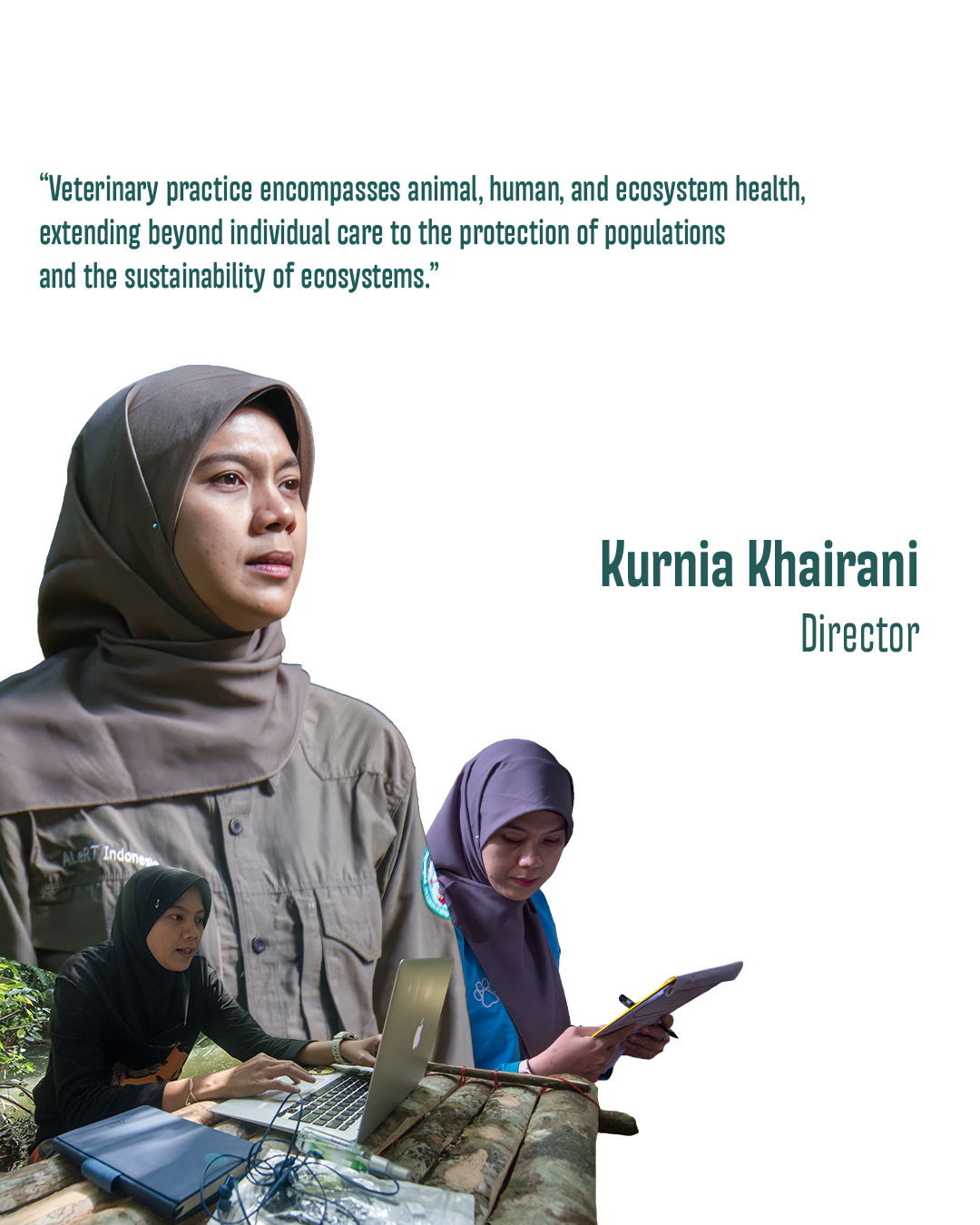
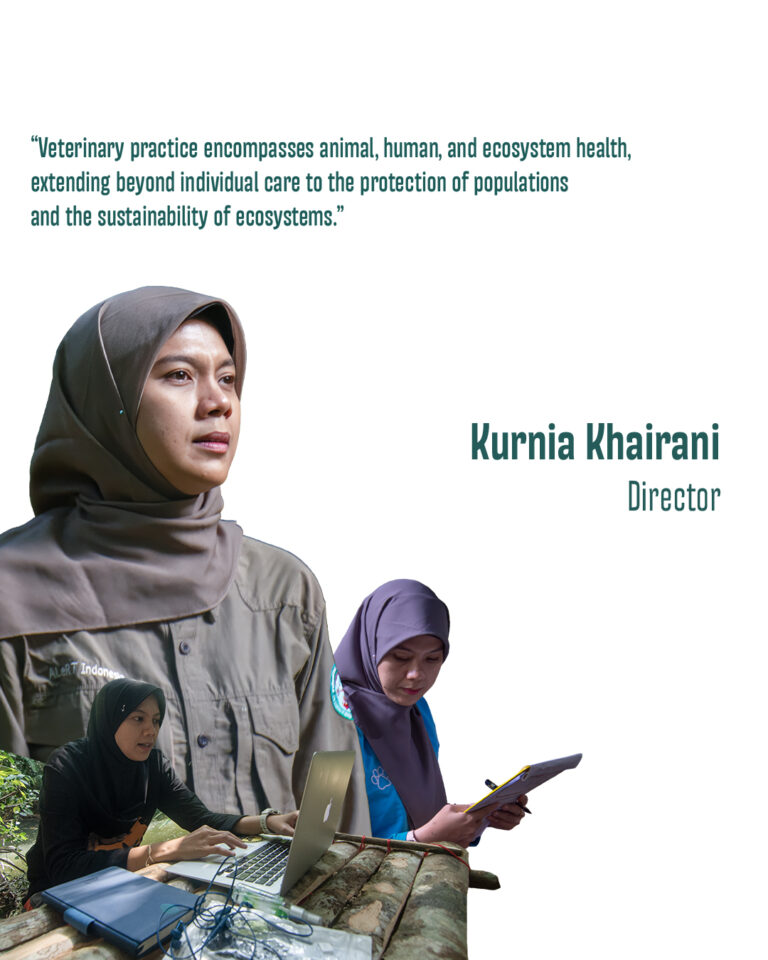
It was a typical day for her, back-to-back Zoom meetings, budget planning, and report reviews. Most of her time was spent in front of a laptop screen, a routine she had come to accept as a second life. When her eyes grew tired, she would pause, close her laptop, and brew a cup of jamu instead of coffee to restore her energy. Living with GERD meant caffeine was no longer an option, despite the demands of her role as Director of ALeRT.
Her journey to this point was shaped over time, through encounters, experiences, and one defining moment that quietly set her path in motion.
As a veterinary student, Drh. Nia did not initially envision a future in wildlife conservation. That changed in 2005, when she joined a Sumatran rhino rescue mission in Bukit Barisan Selatan National Park, led by the Ministry of Forestry and its partner, the International Rhino Foundation. The mission involved relocating Rosa, an adult female Sumatran rhino, to the Sumatran Rhino Sanctuary in Lampung. That experience marked the beginning of a journey she would only fully recognize years later.
Through her involvement in rhino conservation forums, she engaged with policymakers, academics,
and conservationists. These interactions broadened her understanding of veterinary medicine beyond clinical care. She came to see that effective wildlife conservation depends heavily on strong disease surveillance systems. Over time, she developed expertise in monitoring the health of Javan rhino populations, an effort that requires providing veterinary insight without direct physical contact with the animals.
Disease surveillance, she explains, enables early detection, improves disease control, and even helps predict emerging health threats. For elusive species like the Javan rhino, it is an essential tool.
Today, her role has shifted. While only a small portion of her work remains technical, the majority now involves programme management and leadership. She often reflects on how veterinary professionals can contribute in unconventional ways. Her journey demonstrates that veterinary medicine extends far beyond treating animals;
it plays a vital role in maintaining the balance between wildlife, ecosystems, and human health.
Message from the Sea Turtle to the Rhino
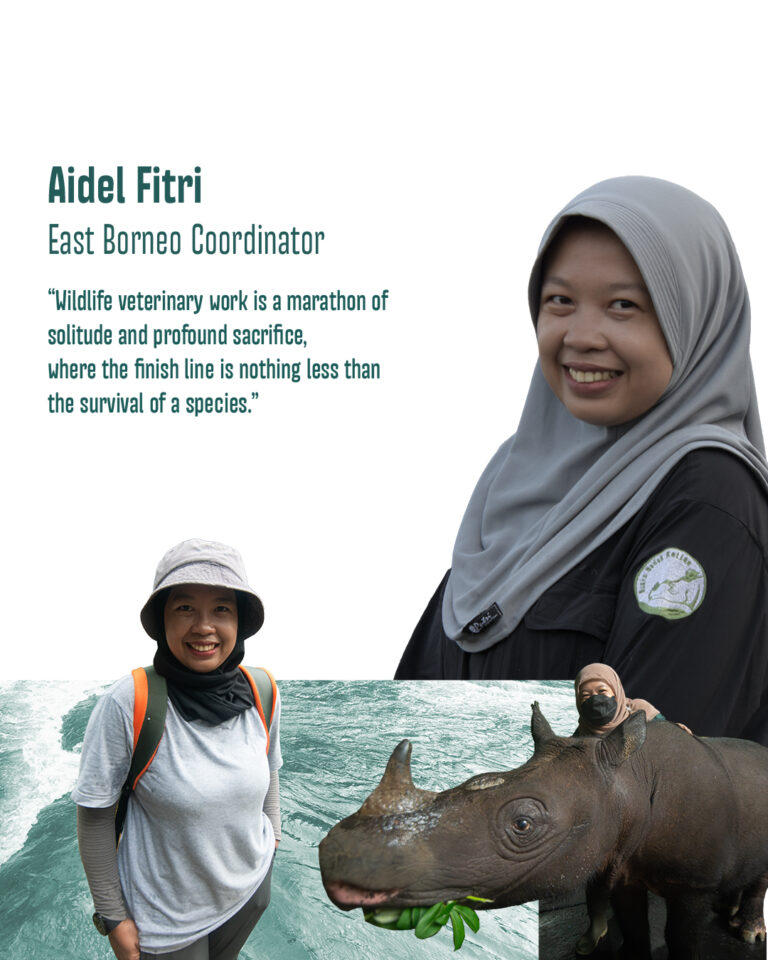
Unlike Drh. Nia, Drh. Aidell’s journey into conservation medicine began with a simple passion for nature. As a self-described nature enthusiast, she loved outdoor activities but had not initially planned to pursue wildlife conservation professionally.
That changed when she joined a sea turtle rescue mission. Although the rescue itself was successful, it marked the beginning of something deeper, a realization that her path lay in protecting wildlife. After graduating and working in remote communities, she returned to conservation, eventually joining wildlife rehabilitation centres in Bogor and later the Kelian Sanctuary, a Sumatran rhino rescue centre.
While she takes pride in her work, her message to aspiring wildlife veterinarians is grounded in realism. She emphasizes that, despite its noble purpose, the profession comes with significant personal sacrifices. It can be isolating, demanding, and not suited for everyone. Long periods in remote areas can distance professionals from family and conventional social life, especially for women balancing family responsibilities.
Yet, for those who choose this path, the sense of purpose often outweighs the challenges. The mission, to protect endangered species and sustain their populations, becomes a powerful source of meaning.
A New Generation Steps Forward
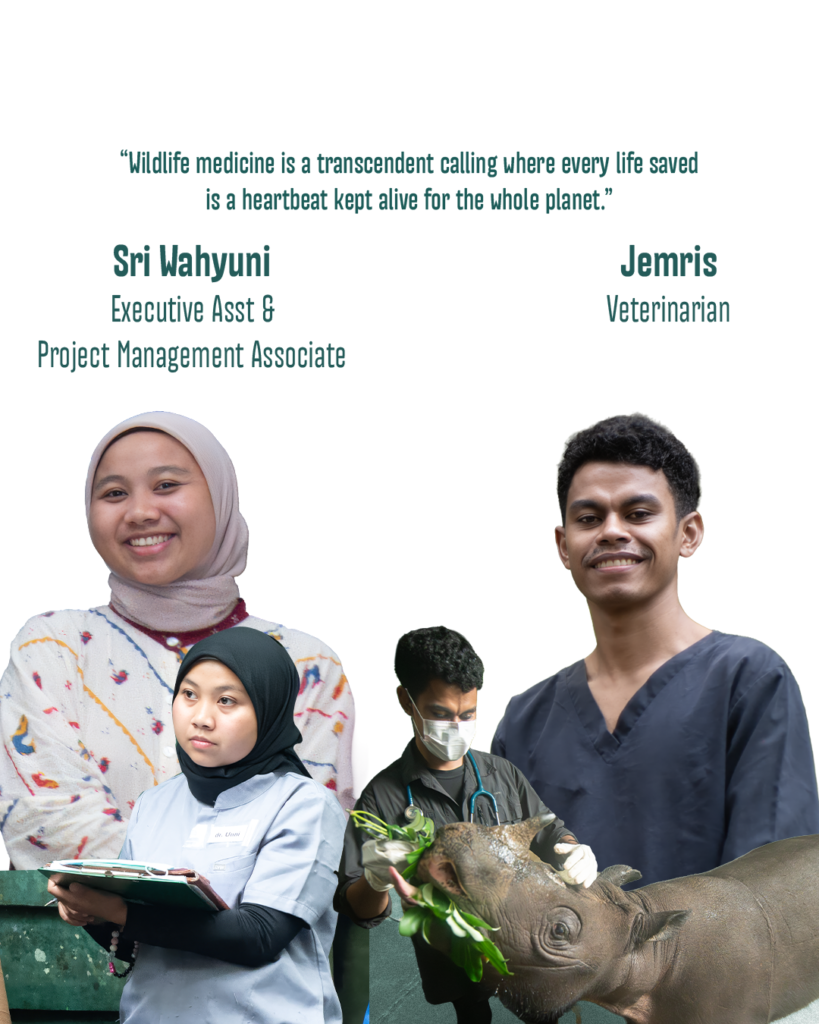
In contrast, younger veterinarians are approaching the field with fresh perspectives. Drh. Uni began her career in a profit-oriented setting as a medical representative before transitioning into small animal practice. Over time, she began to question the broader impact of her work.
Her decision to join ALeRT marked a turning point. Entering the field of wildlife health opened new perspectives, working in remote areas, engaging with local communities and government stakeholders, and understanding that direct intervention is only one part of conservation. Preventive actions and system-level approaches often play an even greater role in safeguarding wildlife health.
As an extrovert, she embraces the challenges and opportunities of the field. She encourages young veterinarians to consider careers in wildlife health, noting that regeneration remains a critical issue in the sector.
Ever-Growing Perspective
They say childhood experiences shaped a person. For Drh. Jemris, growing up on a farm, animals have become an integral part of his life. Animals were everything to his family, their life line. Unfortunately, living in a remote rural area, access for veterinary services are limited. His family relied on traditional remedies and basic husbandry practices, often with uncertain outcomes.
When an outbreak struck their farm, the lack of proper veterinary care resulted in devastating animal losses and significant economic hardship. These experiences left a lasting impression. Determined to change his circumstances, he chose to become a veterinarian.
After graduating from vet school, another realization shaped his path. He became aware of the broader impact of wildlife veterinary services, how a single animal can represent the survival of an entire population. He came to understand that being a veterinarian is not only about treating disease, but also about maintaining the balance of ecosystems.
For him, wildlife veterinary work offered a greater purpose: not only supporting individual farmers, but contributing to species conservation, environmental sustainability, and community well-being.
Answering the Call
Through these stories, we see that the role of veterinarians extends far beyond traditional clinical practice. It crosses boundaries, linking animal health, human health, and environmental sustainability within the One Health framework.
Being a veterinarian for all species requires understanding not only animals, but also ecosystems and communities. It is a profession that is often overlooked, yet essential to global health and conservation.
The call from the wild is not for everyone, but for those who answer it, the impact is profound.


